





Whenever a small business owner considers investing in local search marketing, one question always comes up first: How long does Local SEO take to work?
Agency sales reps love to give vague, non-committal answers. Some promise instant rankings within two weeks. Others tell you that SEO requires an endless monthly retainer before you see any return.
Both extremes are misleading. Local SEO is neither magic nor an endless money pit. It is an algorithmic engineering process that follows predictable milestones.
Over the past decade, I have managed local search campaigns for contractors, medical practices, and professional service firms. While every market possesses unique competitive dynamics, real progress follows a structured timeline.
In this guide, I will share an honest, month-by-month timeline for Local SEO. You will learn what changes in the first thirty days, when to expect consistent phone calls, and what hidden bottlenecks delay results.
Phase 1: Month 1 (The Technical and Profile Foundation)

The first thirty days of a Local SEO campaign establish your foundational data baseline. During this phase, you are fixing structural errors that suppress your ranking visibility.
In our guide on choosing Google Business Profile categories, we explained that category alignment controls up to seventy percent of search reach.
Correcting an inaccurate primary category can produce early ranking jumps within seven to fourteen days. If your profile was mistakenly set to general Contractor, switching to HVAC Contractor triggers immediate algorithmic reassessment.
Month one also involves a thorough citation audit. You must identify and document every incorrect phone number, outdated address, and duplicate listing across major web directories.
Profile verification can take anywhere from a few days to three weeks. Google video verification process often requires manual support review if store signage or work vehicle decals are unclear.
Resolving verification roadblocks early prevents frustrating delays later in your campaign. Make sure your business licenses, utility bills, and insurance certificates match your legal name exactly.
While you may see ranking flickers on Google Maps during month one, do not expect an influx of customer calls yet. Your foundation is simply being prepared for sustained growth.
Phase 2: Months 2 to 3 (The Momentum and Velocity Phase)

During the second and third months, your local optimization efforts begin compounding. This is when your listing starts climbing from obscure positions onto page two or three of Google Maps.
This phase centers on two critical growth engines: citation syndication and customer review velocity.
Directory aggregators like Data Axle and Localeze take several weeks to distribute your standardized business information across hundreds of secondary directories. As these citations index, Google confidence in your physical location strengthens.
Simultaneously, you must launch an automated review generation workflow, following the steps in our guide on how to get more Google reviews.
Consistently collecting two to three authentic reviews every week signals operational vitality. Google begins testing your profile higher in search results, especially for searchers in close physical proximity to your office.
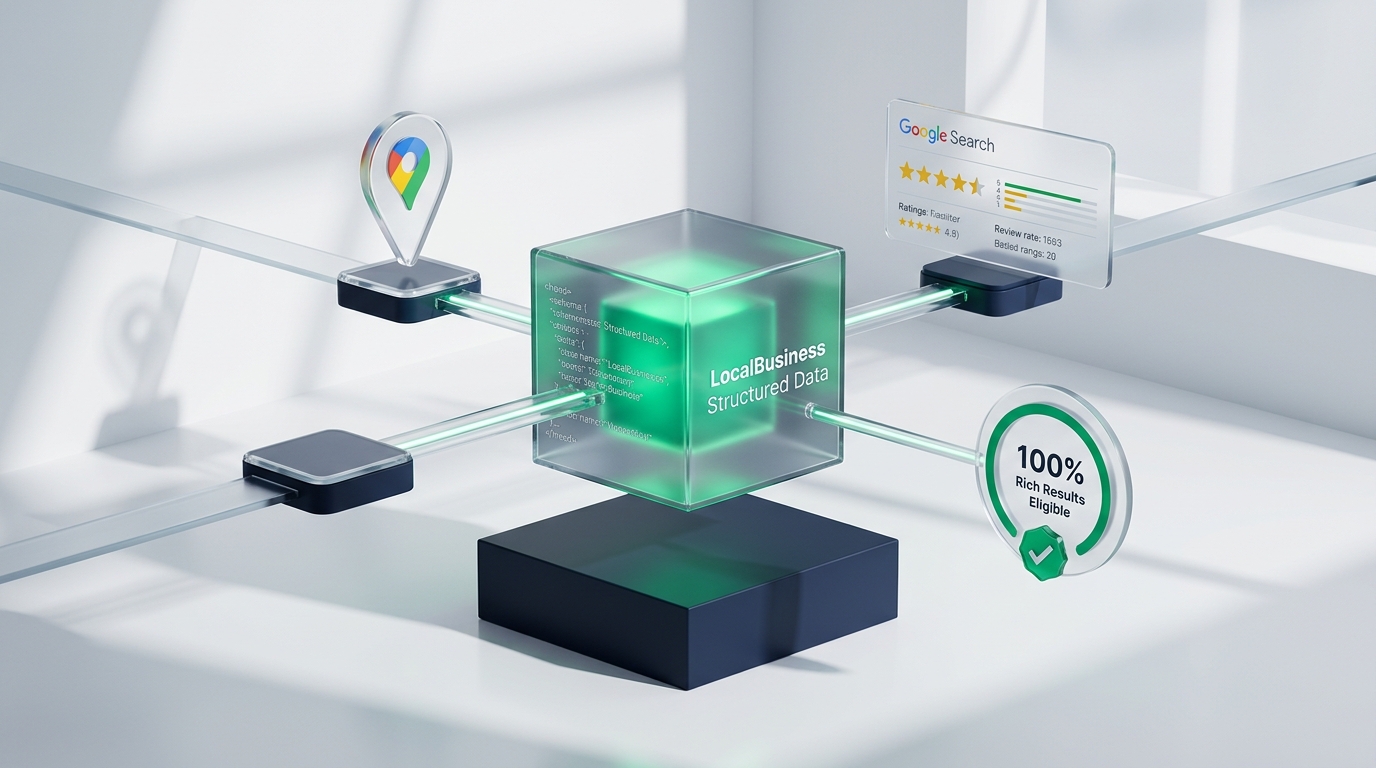
During month two, you should implement structured LocalBusiness JSON-LD schema markup on your website. Schema code helps Google crawlers confirm your physical address, opening hours, and service departments.
Connecting your schema markup directly to your Google Business Profile URL creates a unified data loop. This reinforcement boosts algorithmic certainty across all local ranking signals.
Phase 3: Months 4 to 6 (The Local 3-Pack Breakthrough)
For most competitive service industries, months four through six represent the breakthrough window. This is when your profile claims a consistent spot inside the Google Maps Local 3-Pack.
The financial impact of entering the Local 3-Pack is dramatic. The top three map results capture over forty percent of all local search clicks.
Your incoming phone inquiries, website direction requests, and quote submissions increase significantly. In our guide on Local SEO versus Google Ads, we showed how organic leads reduce your blended customer acquisition cost.
During this stage, your ranking radius expands beyond your immediate street address. Your listing begins appearing for searchers located three, five, and even eight miles away in neighboring suburbs.
Do not rely on standard Google searches from your office computer to track ranking progress. Local search results change dramatically block by block across town.
Use geo-grid tracking tools like Local Viking or Places Scout. These tools show your rank on a map coordinate grid, illustrating how your ranking radius expands week by week.
Phase 4: Months 6 to 12 (Market Authority and Expansion)
Once you secure placement in the Local 3-Pack, the objective shifts from climbing to defending your market position.
Competitors notice when you take their market share. They will update categories, ask for more reviews, and optimize their websites.
Maintaining top rankings requires ongoing profile engagement. You must continue uploading weekly job photos, publishing Google updates, and maintaining steady review velocity.
You can also begin targeting competitive secondary search terms. For example, a plumbing company holding rank for emergency plumbing can expand into water filtration installation and trenchless sewer repair.
The Dangers of Shortcuts That Promise 48-Hour Rankings
When business owners get impatient, they often fall prey to risky local marketing scams. Unscrupulous agencies promise top Google Maps rankings within days using automated spam.
These dangerous tactics include creating fake virtual office listings, stuffing keywords into business titles, and purchasing automated bot reviews.
While these tricks can produce artificial ranking spikes, Google automated anti-spam algorithms detect unnatural review velocity quickly.
Once Google flags your listing for policy violations, your profile faces sudden suspension. Reinstating a suspended listing takes months of appeals, destroying your inbound revenue.
4 Factors That Dictate Your Local SEO Timeline

Why do some businesses rank in sixty days while others take nine months? Four external variables dictate your specific ranking timeline.
1. Market Density and Competitor Sophistication
Ranking a dental practice in a rural town of fifteen thousand residents is vastly easier than ranking in downtown Chicago or Dallas.
In smaller towns, few competitors actively optimize their listings. A complete profile and fifteen fresh reviews can push you to number one within eight weeks.
In dense metropolitan markets, dozens of established companies have collected hundreds of reviews over a decade. Overcoming that accumulated authority requires patient, methodical optimization.
2. Website Authority and Domain Age
Your Google Maps ranking is directly supported by the organic authority of your linked website.
If your website is ten years old with hundreds of local backlinks and fast Core Web Vitals, your Google Maps profile climbs rapidly. Google already trusts your digital brand.
If your business website is brand new, Google places your domain in an algorithmic sandbox. You must build website trust before your Maps listing reaches peak performance.
3. Proximity to the Searcher and City Center
Google algorithm places heavy emphasis on geographic distance. If your physical office sits near the commercial center of town, you gain a natural proximity advantage for general city-wide searches.
If your business is located on the outer agricultural edge of a municipality, ranking across town requires significantly stronger review counts and localized website pages.
4. Historical Data Mess and Past Account Penalties
If your business moved three times in five years, the web is full of conflicting phone numbers and outdated addresses. Cleaning up a tangled citation history takes longer than setting up clean records from scratch.
Similarly, if a past agency used automated bots or keyword-stuffed business titles, your profile may carry hidden trust suppression flags. Removing penalties requires manual auditing and patience.
How to Maintain Momentum After Reaching Number One
Reaching the top of the Google Maps Local 3-Pack is an exciting milestone, but complacency is your biggest threat. Competitors constantly monitor ranking changes and will attempt to replicate your strategy.
Continue requesting reviews from every happy customer, even after reaching one hundred reviews. Google algorithm favors recency, meaning fresh feedback from yesterday outweighs feedback from six months ago.
Upload fresh job site photos every Monday morning and post regular profile updates. Consistent weekly maintenance protects your hard-earned local dominance for years to come.
Realistic Local SEO Month-by-Month Roadmap
Use this reference table to evaluate your Local SEO progress and align your expectations.
| Timeline Phase | Core Technical Tasks | Expected Ranking Movement | Business Phone Call Impact |
|---|---|---|---|
| Month 1 (Foundation) | Category audit, verification check, citation cleanup baseline | Profile indexing; early flickers for low-competition terms | Minimal change; foundation being prepared |
| Months 2 to 3 (Momentum) | Citation syndication, automated SMS review engine, schema markup | Climbing from page 4 to pages 2 and 3; proximity rank tightens | Noticeable uptick in branded searches and map direction clicks |
| Months 4 to 6 (Breakthrough) | Review velocity compounding, city landing pages, photo uploads | Entering the Local 3-Pack for core service search terms | Significant surge in inbound phone inquiries and quote requests |
| Months 6 to 12 (Dominance) | Secondary keyword expansion, competitive defense, ongoing posts | Holding #1 to #3 rankings across a wide geographic radius | Organic Maps calls become the primary source of inbound revenue |
Local SEO is a marathon, not a sprint. If you build your technical foundation correctly and maintain steady review momentum, your Google Maps presence will become your most profitable commercial asset.