







Ranking a local service business in Milwaukee requires a focused regional strategy. If your business depends on inbound customer calls, you cannot rely on generic national marketing playbooks.
Southeast Wisconsin presents distinct geographic realities that shape how search algorithms display local results. Lake Michigan sits directly to your east, meaning half of your natural geographic circle is water.
I have managed and analyzed search campaigns for service companies throughout Milwaukee County and neighboring communities. In this guide, I share how effective SEO in Milwaukee functions, what search signals drive rankings, and how to convert local visibility into paying clients.
The Lake Michigan Centroid and Regional Corridors
In standard search optimization models, search engines evaluate proximity in a balanced circle around a physical office. In Milwaukee, the metropolitan core borders the lakefront.
Because there are no potential clients living in Lake Michigan, customer demand extends inland. Your search strategy must actively project west along Interstate 94 toward Waukesha and north and south along Interstate 43.
Homeowners in Wauwatosa, Brookfield, Greenfield, and Mequon expect prompt service from nearby providers. When an agency applies standard radius templates, they waste resources on water while missing suburban demand.
High-performing regional campaigns target these commercial travel corridors intentionally. They account for county borders, municipal identities, and local consumer commuting patterns.
The Three Pillars of Milwaukee Search Visibility
Achieving durable positions in the Milwaukee Local 3-Pack and organic search listings requires three synchronized elements. If you omit any single element, your overall lead generation pipeline suffers.
The first pillar is your verified Google Business Profile. Choosing the accurate primary category and maintaining consistent operational information gives search engines clear context regarding your trade.
The second pillar is localized on-site content architecture. Your website must provide dedicated service pages tailored to customer pain points rather than relying on a general homepage. You can review my guide on how to show up on Google Maps for profile setup instructions.
The third pillar is steady review velocity. Authentic reviews submitted by customers located across Milwaukee, Waukesha, and Ozaukee counties confirm that you actively serve the entire metropolitan area. We previously analyzed why your competitor ranks above you on Google Maps, where review velocity is often the deciding factor.

Structuring Regional Pages Without Keyword Stuffing
Many local businesses attempt to rank across Southeast Wisconsin by publishing duplicate pages that only swap out the city name. Google algorithms recognize these low-quality doorway pages and filter them from search results.
To rank sustainably in suburban markets like Brookfield, Wauwatosa, West Allis, and Mequon, each page must deliver distinct value. I recommend detailing actual completed projects, local zoning considerations, and neighborhood landmarks.
For instance, an HVAC contractor targeting Wauwatosa should discuss historic home boiler conversions and local heating challenges. That same contractor targeting Brookfield should focus on modern residential zoning and commercial rooftop units.
Adding original job site photography and verified client testimonials from each specific ZIP code reinforces organic relevance. This content demonstrates legitimate community experience that algorithmic updates consistently reward.
Technical Local SEO and Structured Schema Integration
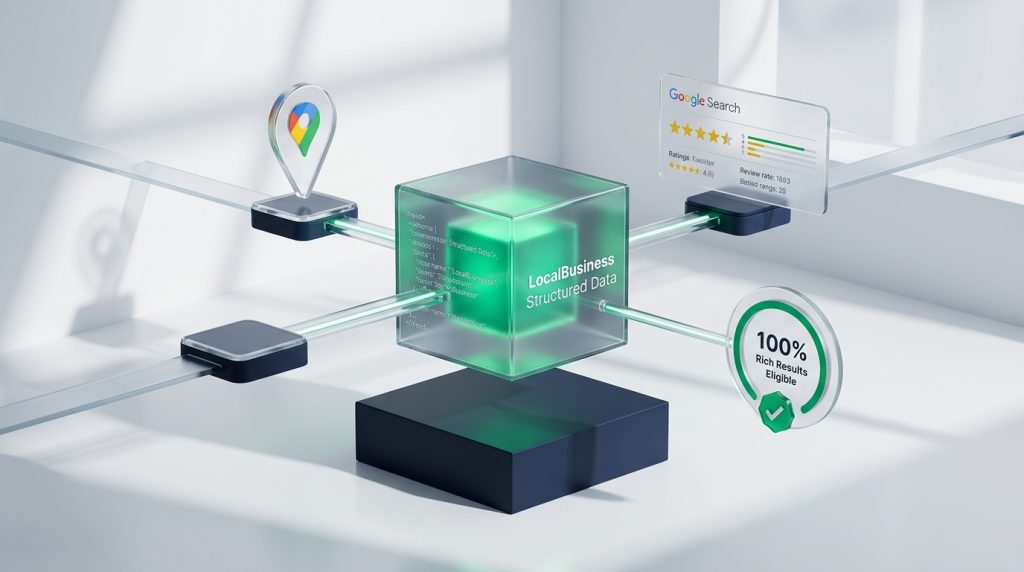
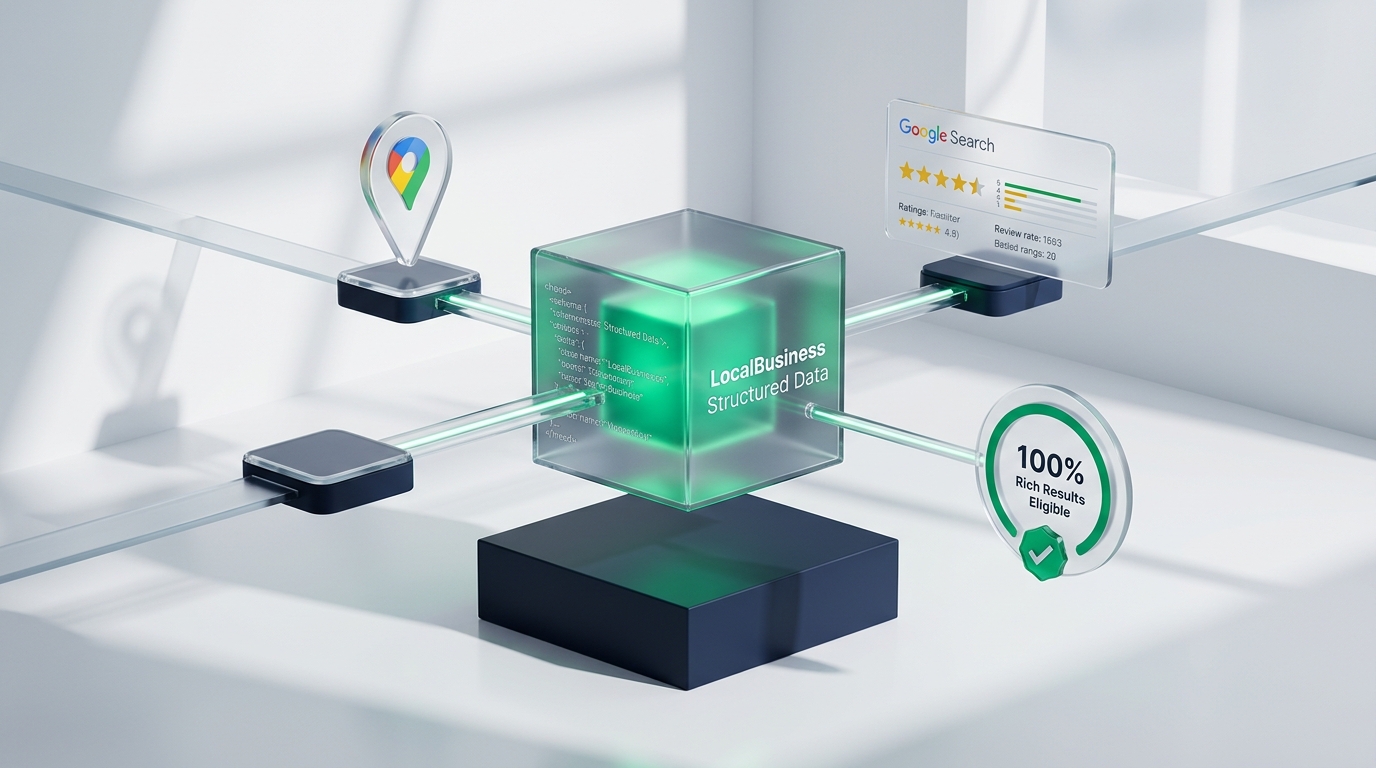
Search engines use structured data to confirm your location, hours of operation, and service boundaries. Without schema markup, search bots must interpret your operational details from unstructured body copy.
I implement comprehensive JSON-LD LocalBusiness schema on client websites. This code clearly defines your business name, physical street address, phone number, geographic coordinates, and official service areas.
Your geographic coordinates pin your precise operational base in Southeast Wisconsin. The service area property outlines each municipality you serve, aligning with the boundaries specified in your Google Business Profile.
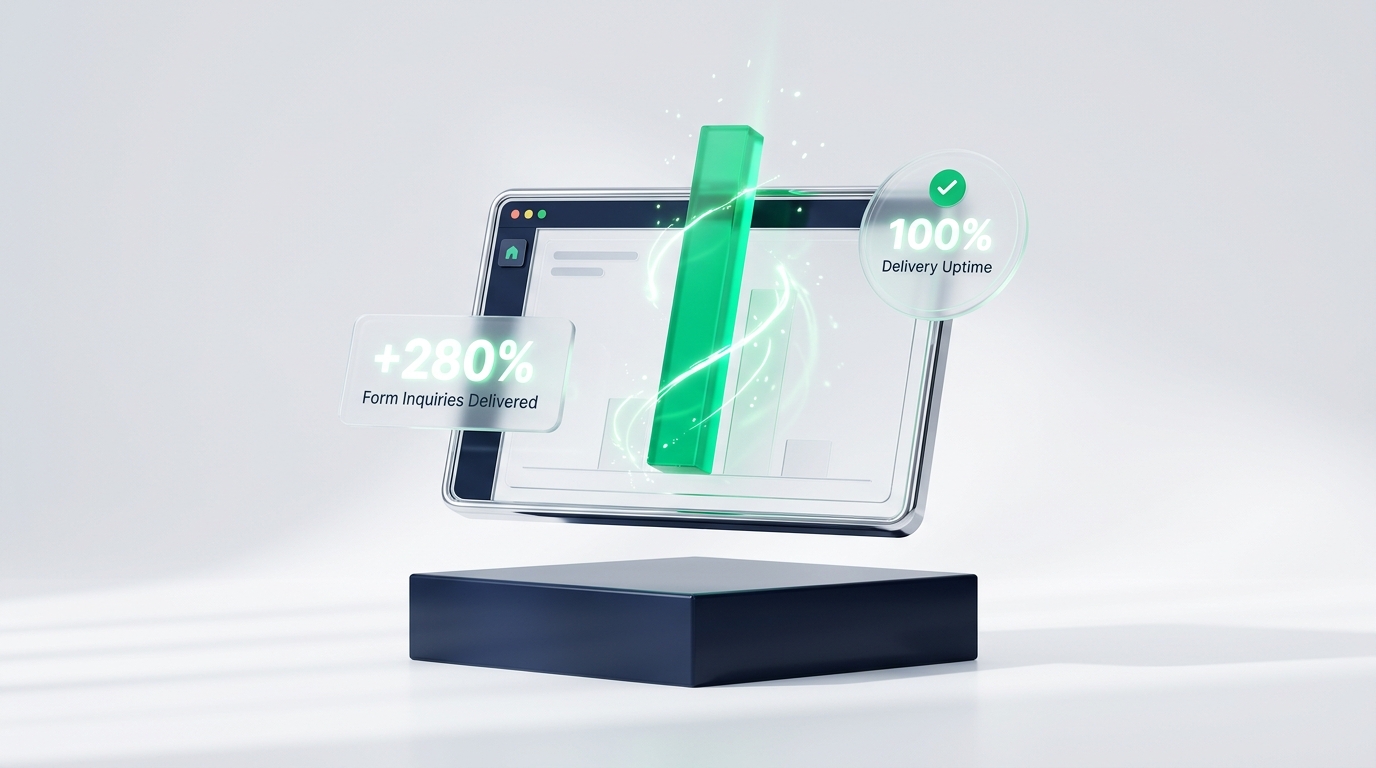
Furthermore, technical page speed directly impacts local rankings and mobile conversion rates. Cellular users in transit will not wait for sluggish pages to finish rendering. As we outlined in our guide on local business marketing solutions, mobile speed directly dictates lead capture.
Building Authority Across the 414 and 262 Area Codes
Inbound links remain an essential signal within Google organic search algorithm. For regional companies, the geographic relevance of your backlink profile matters far more than generic domain metrics from irrelevant national sources.
A citation or backlink from a recognized Wisconsin organization establishes immediate trust. Joining regional chambers of commerce, partnering with local trade groups, or supporting civic initiatives generates strong regional trust signals.
Local media features also strengthen your digital presence. Offering expert commentary to regional news publications or Wisconsin trade journals generates authoritative citations that national competitors cannot acquire.
Additionally, keep your business information uniform across major data aggregators. Conflicting phone numbers, mismatched addresses, or outdated trade names dilute your search authority and confuse potential callers.
Review Velocity and Reputation Signals
Customer feedback shapes both your Map Pack placement and the final hiring decision of prospective customers. A company with 120 recent reviews routinely captures the lead over a competitor with 40 reviews posted three years prior.
The critical factor is review velocity, which tracks the consistent arrival of genuine customer reviews over time. A sudden cluster of 25 reviews followed by months of silence looks unnatural to spam detection algorithms.
I advise setting up an automated feedback workflow using direct text messages and post-service follow-up emails. Sending a feedback prompt within two hours of job completion yields the strongest response rate. You can check our detailed guide on how to get more Google reviews for compliant collection practices.
Ask satisfied customers to mention the specific service provided and their neighborhood in their comments. When a client notes that you repaired a furnace in Bay View, Google associates your business with that service and location.

Comparing SEO Approaches for Milwaukee Businesses
Selecting the right search marketing strategy determines whether your marketing spend produces tangible customer revenue or vanity rankings. The table below outlines how different approaches compare.
| Optimization Area | Generic National Agency | Dedicated Milwaukee SEO Strategy |
|---|---|---|
| Geographic Focus | Circular radius templates ignoring Lake Michigan boundaries | Custom corridor mapping targeting I-94 and I-43 commuter routes |
| Suburban Content | Automated thin pages with simple city name substitutions | Handcrafted local pages detailing real projects and neighborhood context |
| Authority Acquisition | Low-relevance national directory spam and generic link packages | Regional Wisconsin associations, civic sponsorships, and local PR |
| Conversion Focus | Tracking search impressions with no call tracking integration | Direct mobile call tracking, form testing, and lead source telemetry |
| Performance Tracking | Monthly PDF summaries displaying vanity keyword rankings | Revenue attribution tracking qualified phone calls and closed contracts |
A national firm managing hundreds of clients rarely dedicates the time needed to understand nuances between Shorewood, West Allis, and Waukesha. Tailored local execution yields superior returns on your marketing investment.
Telemetry and Attribution: Measuring Booked Revenue
Keyword rankings are merely diagnostic metrics. The sole metric that matters to a business owner is the volume of qualified customer inquiries and booked contracts.
To evaluate the return on your search budget, implement dynamic call tracking. Dynamic number insertion assigns unique tracking numbers based on where the visitor originated, such as organic search, Google Maps, or direct visits.
This tracking infrastructure reveals which specific terms prompted the caller to reach out. When you verify that your Waukesha landing page produced ten profitable service calls this month, you can allocate capital with confidence.
Moreover, analyzing recorded inbound calls exposes friction points in your front-office intake. If staff miss calls or fail to collect caller details, marketing funds are wasted regardless of your search positions.
Three Critical Traps to Avoid in Regional Search
Over the years, I have seen local owners make critical missteps that caused lasting damage to their online visibility. Steering clear of these three mistakes will protect your digital reputation.
The first trap is stuffing your Google Business Profile name with city keywords. While adding city names might offer a brief ranking bump, Google routinely suspends profiles that breach naming guidelines. Resolving a suspension can take weeks, during which your phone stops ringing.
The second trap is purchasing artificial reviews or joining review trade groups. Search engine algorithms identify unnatural review patterns and synthetic accounts quickly. Profiles caught manipulating reviews face public warning badges or complete removal.
The third trap is ignoring mobile conversion design while pursuing search traffic. Ranking at the top of Google brings visitors to your site, but slow load speeds and hidden phone numbers drive them away instantly. As we explained in our breakdown of milwaukee website design, rankings must pair with conversion design.
How Long Does It Take to Rank in Milwaukee?
Local search engine optimization builds compounding value over time. The time required to achieve page-one visibility depends on existing domain authority, competitor aggressiveness, and website health.
For established businesses with an existing website and clean citations, initial improvements in Map Pack rankings typically emerge within 60 to 90 days. These early wins usually stem from refining profile categories, resolving citation discrepancies, and updating meta tags.
Earning top rankings for competitive terms across suburban communities generally takes six to nine months of steady optimization. This duration allows adequate time for regional link acquisition, helpful content publication, and consistent review velocity.
Once your business achieves top placement in the Milwaukee Local 3-Pack, defending that position requires less effort than the climb. The continuous flow of customer inquiries and reviews creates a self-sustaining authority loop that keeps competitors behind.
Frequently Asked Questions About SEO in Milwaukee
How much do local SEO services cost for Milwaukee businesses?
Professional local search optimization in Southeast Wisconsin ranges from $1,200 to $3,500 per month. Pricing depends on competition, market size, and website condition. Local service companies investing in focused campaigns usually recoup their monthly spend through two or three booked customer contracts.
Can my company rank in Waukesha if my physical address is in Milwaukee?
Yes, your business can capture rankings in neighboring suburbs through well-planned service area pages, genuine project case studies, and customer reviews from those communities. While proximity influences Map Pack results, comprehensive organic pages can capture top positions across municipal borders.
What is the difference between local SEO and Google Ads in Milwaukee?
Google Ads provide immediate visibility at the top of the search page but require continuous payment for every click. Local SEO builds lasting organic authority and Map Pack prominence that generates ongoing inquiries without per-click fees. Most growing service businesses use Google Ads for short-term lead volume while building local SEO assets for durable profitability.