







Plastic surgery and medical aesthetics operate in a different reality than standard local service businesses. When a patient considers a rhinoplasty, facelift, or body contouring procedure, they are not shopping for an emergency repair.
They are making a deeply personal, high-trust financial investment in their appearance and health. Aesthetic patients spend months researching options, comparing surgeon credentials, and evaluating before-and-after results before ever booking an appointment.
In this guide, I break down how effective plastic surgery web design works. I explain how to showcase clinical authority and convert discreet inquiries into confirmed consultations.

The High-Trust Patient Decision Journey
The patient journey for aesthetic surgery is deliberate and emotionally complex. Unlike urgent home services, prospective cosmetic patients rarely make impulsive decisions.
A typical prospective patient visits your website six to eight times across multiple devices. They inspect your surgeon credentials, examine patient outcomes that match their specific anatomical profile, and read patient stories.
If your website looks outdated, cluttered, or uses generic stock photography, patients assume your clinical standards are equally dated. Your digital presence must reflect the precision, cleanliness, and artistic refinement of your operating room.
Every element of your website design must build trust. When patients feel confident in your expertise and respect for patient privacy, they take the next step to request a private consultation.
Establishing Surgical Authority Above the Fold
The primary role of your homepage header is establishing surgical credibility within the first five seconds of a visitor arrival. Patients need immediate assurance that they are consulting a qualified board-certified specialist.
Prominently feature your official board certifications, medical school affiliations, and specialized fellowship training right in the hero section. Emphasize credentials from recognized medical boards such as the American Board of Plastic Surgery.
Highlight academic appointments, peer-reviewed medical publications, and hospital privileges prominently. These credentials establish your standing as a surgical leader who contributes actively to advancing clinical standards.
In addition, include an introductory video or surgeon statement directly on the homepage. Video allows prospective patients to hear your voice, understand your philosophy, and evaluate your bedside manner before stepping foot into your clinic.
This personal connection reduces patient vulnerability and anxiety. It establishes you as an empathetic medical expert rather than an impersonal commercial enterprise.
Designing High-Converting Before-and-After Galleries
Your before-and-after photo gallery is the single most visited asset on your website. It accounts for more than half of the total time prospective patients spend browsing your pages.
A disorganized gallery where users must scroll through hundreds of mixed photos frustrates visitors. Modern gallery architecture requires intuitive filtering by procedure, patient age bracket, anatomical characteristics, and healing timeframe.
Ensure that all surgical outcome photos maintain consistent medical photography standards. Cases should feature standardized medical lighting, neutral studio backgrounds, and identical camera angles across frontal, lateral, and oblique views.
For example, a prospective breast augmentation patient should be able to filter cases by incision type, implant size, and starting frame. Seeing an outcome on a patient with a similar body profile builds realistic expectations and decision confidence.
Furthermore, provide interactive comparison tools. A smooth touch-friendly slider that allows mobile users to swipe between preoperative and postoperative views creates an engaging experience that highlights surgical nuance.
Patient Privacy, Discretion, and HIPAA Compliance
Privacy is paramount in elective medical care. Prospective aesthetic patients are acutely sensitive about confidentiality and data security.
Your consultation booking workflow must communicate strict discretion. Clearly state that all inquiries and uploaded photos are encrypted and handled in compliance with HIPAA privacy standards.
Avoid asking for invasive medical details on public website forms. Keep initial inquiry forms limited to essential contact details, procedure interest, and preferred consultation times.
Execute formal Business Associate Agreements with your web hosting provider, form service, and analytics vendors. These agreements ensure that patient information remains legally protected across your entire digital infrastructure.
If you offer virtual consultations with photo submissions, route all patient uploads through secure HIPAA-compliant medical portal integrations. Never transmit identifiable patient imagery through standard unencrypted email channels.

Comparing Web Design Frameworks for Aesthetic Practices
Medical practices often debate whether to use standard healthcare website templates or invest in a bespoke conversion architecture. The following table illustrates the operational differences.
| Design Standard | Generic Healthcare Template | Bespoke Plastic Surgery Platform |
|---|---|---|
| Visual Atmosphere | Clinical blue hospital styling with generic stock models | Refined luxury aesthetic matching a boutique private surgical suite |
| Gallery Experience | Basic grid with static thumbnails and no anatomical filtering | Interactive multi-axis filtering with touch comparison sliders |
| Consultation Intake | Generic single-stage contact form sending plain text emails | Secure HIPAA-compliant multi-step inquiry and virtual consult funnel |
| Mobile Performance | Slow image loading caused by heavy full-size uncompressed photos | Sub-second delivery using responsive WebP compression and CDN caching |
| Attribution Telemetry | Basic pageview tracking with zero procedure revenue data | Privacy-compliant attribution linking consult requests to marketing sources |
A customized platform reflects the quality of your practice. For more context on custom platforms, explore our analysis of WordPress vs Wix vs Squarespace for local businesses.
Technical Speed and High-Resolution Medical Image Delivery
Medical aesthetic websites carry hundreds of high-resolution case photographs. If improperly managed, these images create severe performance bottlenecks on mobile networks.
A website that takes four seconds to load damages your search engine visibility and drives impatient visitors away. As we examined in our guide on why is my website slow on phones, speed is fundamental to conversion performance.
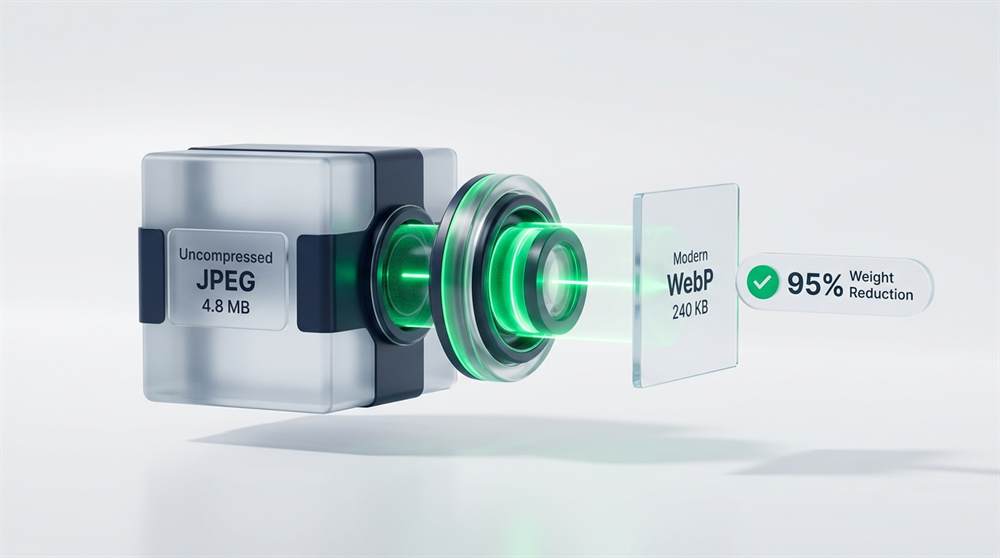
To preserve image clarity while maintaining rapid page speeds, convert all gallery photographs to modern WebP or AVIF formats. These formats achieve up to 80 percent file size reduction without noticeable loss in surgical detail.
Implement intelligent lazy loading so that off-screen case photos only load when the user scrolls near them. Pair this with global content delivery networks to ensure swift photo rendering regardless of where the patient is browsing.
Consultation Attribution and Intake Telemetry
Tracking marketing performance in aesthetic medicine requires careful adherence to patient privacy regulations. Standard commercial tracking pixels can accidentally expose protected health information if configured improperly.
I configure server-side conversion telemetry that tracks consultation requests without passing sensitive medical details to third-party advertising networks. This setup maintains full HIPAA compliance while giving you accurate return on investment data.
Dynamic call tracking enables your practice to see which marketing channels generate high-value surgical inquiries. You can determine whether a facelift consultation originated from organic search, Google Ads, or social media referrals.
In addition, track intake conversion rates across your administrative team. If your front desk staff fails to follow up on web consultation leads within two hours, your marketing investment is compromised. You can review our broader strategies in local business marketing solutions.
Three Web Design Mistakes Costing Aesthetic Clinics Revenue
Over years of auditing medical websites, I frequently observe three critical design mistakes that suppress consultation booking rates.
The first mistake is burying surgeon credentials inside an about page. Prospective patients must see your board certifications, educational background, and hospital privileges immediately upon arrival.
The second mistake is neglecting mobile gallery optimization. More than 65 percent of aesthetic gallery browsing happens on smartphones. If your before-and-after photos are too small or fail to support pinch-to-zoom on mobile, patients look elsewhere.
The third mistake is using cold corporate medical language rather than clear educational content. Explain surgical procedures in plain English, addressing recovery timelines, discomfort levels, and realistic outcomes candidly.

The Long-Term Value of a Premium Aesthetic Platform
Aesthetic surgical procedures represent substantial revenue per patient case. A single mommy makeover or deep plane facelift case can generate upwards of fifteen to twenty thousand dollars.
Under these economic dynamics, your website is not an administrative cost center. It is your most productive patient acquisition channel.
A bespoke website that increases your monthly consultation requests from ten to twenty can add hundreds of thousands of dollars in booked surgical revenue annually. It also insulates your practice against local competitors who rely on generic marketing templates.
When combined with localized search optimization, as detailed in our guide on milwaukee seo services, your practice establishes a durable, high-margin patient acquisition engine.
Investing in exceptional design also supports higher pricing power. When your digital presentation reflects world-class clinical expertise, patients rarely question consultation fees or surgical quotes.
Frequently Asked Questions About Plastic Surgery Web Design
How much does a custom plastic surgery website cost?
A custom, HIPAA-compliant website for a plastic surgery practice typically ranges from $8,000 to $18,000. This investment covers specialized before-and-after gallery architecture, surgeon credentialing sections, responsive mobile speed optimization, secure consultation intake flows, and procedure copywriting.
How do we ensure patient photo galleries remain HIPAA-compliant?
Patient gallery compliance requires obtaining signed written media consent forms from all patients before publishing photographs. In addition, all identifiable metadata must be stripped from image files, and photos must be hosted on secure servers with strict access controls.
How long does it take to design and launch an aesthetic practice website?
A comprehensive aesthetic practice website project typically takes eight to twelve weeks. This timeline ensures adequate time for custom wireframing, high-resolution photo optimization, procedural content development, security audits, and staff intake training prior to launch.